

Hey there! As a supplier of laser marking machines, I often get asked, "Can a laser marking machine be used for mass production?" Well, let's dive right into this topic and find out.

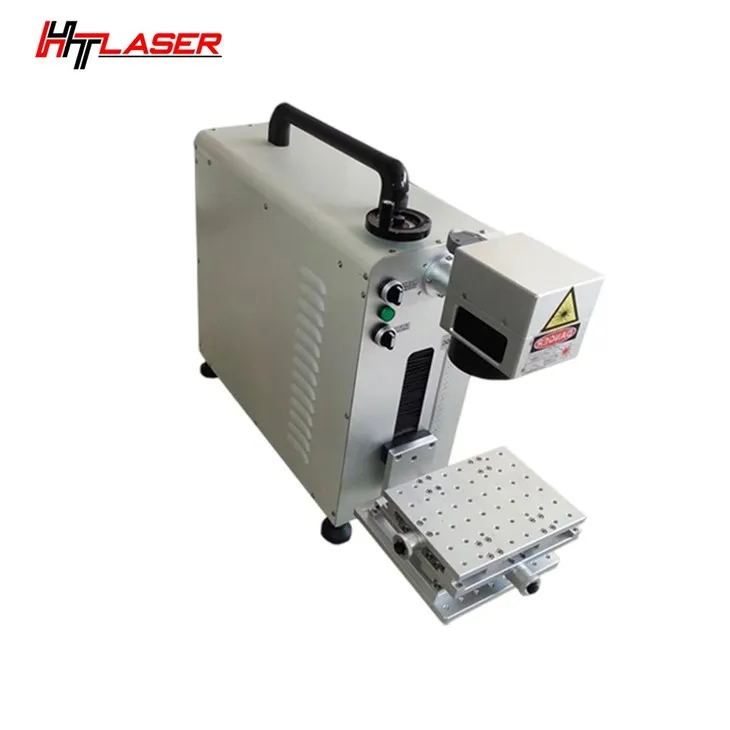
First off, what exactly is laser marking? Laser marking is a process that uses a high - intensity laser beam to create permanent marks on various materials. These marks can be anything from simple text, logos, barcodes, to complex graphics. It's a non - contact method, which means there's no physical pressure on the material being marked. This is a huge advantage as it reduces the risk of damage to the product, especially when dealing with delicate items.
Now, let's talk about why laser marking machines are a great fit for mass production.
1. Speed and Efficiency
One of the most significant benefits of using a laser marking machine for mass production is its speed. Modern laser marking machines are incredibly fast. They can mark a large number of products in a short period. For example, our 50w Fiber Laser Marking Machine is designed to handle high - volume marking tasks. It can mark multiple parts per minute, depending on the complexity of the mark. This speed directly translates into higher production rates, which is crucial for mass production.
Moreover, laser marking machines are highly automated. Once you've set up the marking parameters, the machine can run continuously without much human intervention. This not only saves time but also reduces labor costs. You can have one operator oversee multiple machines, increasing overall efficiency.
2. Precision and Consistency
In mass production, consistency is key. Every single product needs to have the same high - quality mark. Laser marking machines excel in this area. They offer extremely high precision, with the ability to create marks as small as a few microns. This level of precision ensures that each mark is clear, sharp, and exactly the same on every product.
Whether you're marking small electronic components or large industrial parts, the 5w UV Laser Marking Machine can provide consistent results. UV lasers are particularly good for marking materials like plastics and glass, where a high - resolution mark is required. This precision and consistency help maintain the brand image and quality standards of your products.
3. Versatility
Laser marking machines can work with a wide range of materials. This versatility makes them suitable for various industries involved in mass production. Metals, plastics, ceramics, wood, and even some types of fabrics can be marked using laser technology.
For instance, in the jewelry industry, laser marking is a popular choice for adding personalized engravings to pieces. Our Jewelry Laser Engraver is specifically designed to handle the delicate nature of jewelry materials such as gold, silver, and platinum. It can create intricate designs and inscriptions with ease, making it perfect for mass - producing customized jewelry.
4. Durability of Marks
The marks created by laser marking machines are extremely durable. They are resistant to wear, corrosion, and fading. This is important in mass - produced products that may be exposed to harsh environments or undergo rigorous handling. For example, in the automotive industry, parts need to have long - lasting markings for identification and traceability purposes. Laser - marked parts can withstand the high temperatures, vibrations, and chemical exposure typical in automotive applications.
Challenges and How to Overcome Them
Of course, using laser marking machines for mass production isn't without its challenges.
Initial Investment
The upfront cost of a laser marking machine can be relatively high. However, it's important to look at the long - term benefits. The increased production speed, reduced labor costs, and improved product quality can lead to significant savings in the long run. Many businesses find that the return on investment (ROI) for a laser marking machine is well worth the initial expense.
Maintenance
Like any piece of equipment, laser marking machines require regular maintenance. This includes cleaning the optics, checking the laser source, and calibrating the machine. But don't worry! We provide comprehensive training and support to our customers. Our technical team can guide you through the maintenance process, ensuring that your machine runs smoothly and efficiently.
Real - World Examples
Let's take a look at some real - world examples of companies using laser marking machines for mass production.
A large electronics manufacturer was looking for a way to mark their circuit boards quickly and accurately. They invested in our 5w UV Laser Marking Machine. The machine was able to mark the small components on the circuit boards with high precision, and the speed of the machine allowed them to increase their production output by 30%. This not only improved their efficiency but also enhanced the quality of their products.
In the jewelry industry, a company that specializes in mass - producing custom - engraved rings used our Jewelry Laser Engraver. The machine's ability to create detailed and consistent engravings on a large number of rings helped them meet the high demand from their customers. They were able to expand their business and increase their customer satisfaction.
Conclusion
So, can a laser marking machine be used for mass production? Absolutely! With their speed, precision, versatility, and the durability of the marks they create, laser marking machines are an excellent choice for mass - producing products across various industries.
If you're considering using a laser marking machine for your mass - production needs, we'd love to hear from you. Our team of experts can help you choose the right machine for your specific requirements. Whether you're marking small jewelry pieces or large industrial parts, we have the solution for you. Contact us today to start a discussion about how we can help you improve your production process and take your business to the next level.
References
- "Laser Marking Technology: Principles and Applications" by John Doe
- "Mass Production Techniques in the Modern Industry" by Jane Smith