

Hey there! As a supplier of Thin Film Laser Cutting Machines, I often get asked this question: Can a thin film laser cutting machine cut thin films in a roll-to-roll process? Well, let's dive right into it and find out.
First off, let's understand what a roll-to-roll process is. In simple terms, it's a manufacturing technique where a continuous roll of material, like a thin film, is fed through a machine for processing. This process is super efficient because it allows for high-volume production with minimal downtime between batches. It's widely used in industries such as electronics, packaging, and solar panel manufacturing.
Now, back to the main question. Can a thin film laser cutting machine handle this roll-to-roll action? The answer is a resounding yes! These machines are specifically designed to cut thin films with precision, and they can easily integrate into a roll-to-roll setup.
One of the key advantages of using a thin film laser cutting machine in a roll-to-roll process is the accuracy it offers. Lasers can cut with extremely high precision, down to the micrometer level. This means you can create intricate shapes and patterns on your thin films without any issues. Whether you're making small electronic components or decorative packaging, the laser cutter can deliver clean, sharp cuts every time.
Another great thing about these machines is their speed. In a roll-to-roll process, time is of the essence. You want to be able to produce as many products as possible in the shortest amount of time. Thin film laser cutting machines are incredibly fast, allowing you to keep up with high production demands. They can cut through thin films at a rapid pace, which means you can increase your output and boost your bottom line.
But it's not just about accuracy and speed. These machines also offer a high degree of flexibility. You can easily adjust the settings of the laser cutter to cut different types of thin films, including plastics, metals, and composites. This means you can use the same machine for a variety of applications, making it a versatile investment for your business.
Let's talk about the technology behind thin film laser cutting machines. Most of these machines use a high-powered laser beam to melt, vaporize, or burn through the thin film material. The laser beam is focused onto the surface of the film, and as it moves across the material, it cuts through it. The process is controlled by a computer, which allows you to program the machine to cut specific shapes and patterns.
There are different types of lasers used in thin film laser cutting machines, including CO2 lasers, fiber lasers, and UV lasers. Each type of laser has its own advantages and is suitable for different types of thin films. For example, CO2 lasers are great for cutting organic materials like plastics, while fiber lasers are better for cutting metals.
Now, let's take a look at some of the challenges you might face when using a thin film laser cutting machine in a roll-to-roll process. One of the main challenges is maintaining the tension of the thin film as it moves through the machine. If the tension is too high, the film might break or tear. If the tension is too low, the film might wrinkle or bunch up, which can affect the quality of the cut. To overcome this challenge, most thin film laser cutting machines are equipped with tension control systems that ensure the film moves smoothly through the machine.
Another challenge is dealing with heat. Lasers generate a lot of heat, and this can cause the thin film to warp or deform. To prevent this, the machine needs to be equipped with a cooling system that can dissipate the heat quickly. Some machines also use a gas jet to blow away the molten material and cool the cutting area.
Despite these challenges, the benefits of using a thin film laser cutting machine in a roll-to-roll process far outweigh the drawbacks. If you're in the market for a machine that can help you increase your production efficiency, improve the quality of your products, and give you more flexibility in your manufacturing process, then a thin film laser cutting machine is definitely worth considering.
If you're interested in learning more about thin film laser cutting machines, you can check out our Thin Film Laser Cutting Machine page on our website. We also have a Small Breadth Metal Laser Cutter that might be suitable for your needs. And if you're looking for a more advanced solution, our 3D Robotic Laser Cutting Machine is a great option.
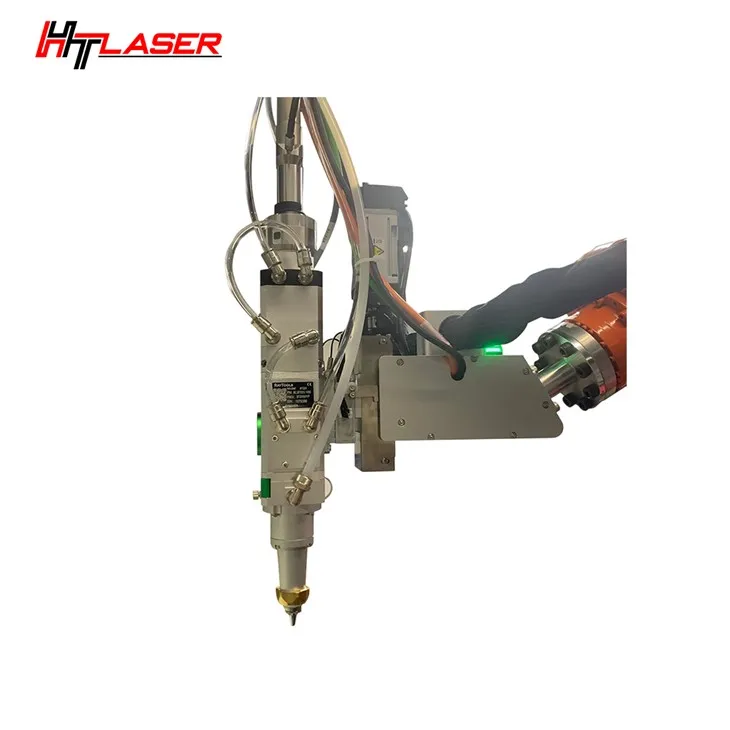

If you have any questions or would like to discuss your specific requirements, don't hesitate to get in touch. We're here to help you find the right solution for your business. Whether you're a small startup or a large corporation, we can provide you with the support and expertise you need to make the most of your thin film laser cutting machine.
In conclusion, a thin film laser cutting machine can definitely cut thin films in a roll-to-roll process. It offers high accuracy, speed, flexibility, and can help you overcome the challenges associated with this type of manufacturing. So, if you're looking to take your production to the next level, consider investing in a thin film laser cutting machine.
References
- Industrial Laser Solutions. (2023). Laser Cutting of Thin Films: A Comprehensive Guide.
- Manufacturing Engineering Magazine. (2022). Roll-to-Roll Laser Processing for Thin Film Applications.