

Hey there! As a supplier of UV Laser Cutting Machines, I often get asked about how these machines perform when it comes to edge quality. Well, let me tell you, the edge quality is one of the standout features of UV laser cutting machines, and I'm gonna break it down for you.
First off, let's understand what UV laser cutting is all about. UV lasers operate at a shorter wavelength compared to other types of lasers, like fiber or CO2 lasers. This short wavelength gives UV lasers some unique properties that are super beneficial for achieving top - notch edge quality.
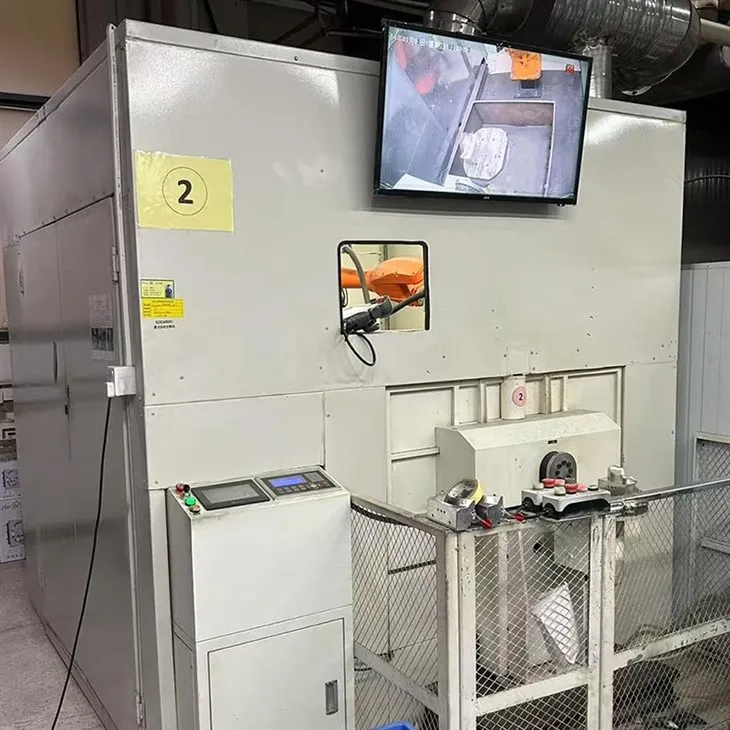

One of the key advantages is the minimal heat - affected zone (HAZ). When you're cutting materials, heat can cause all sorts of problems. It can melt the edges, warp the material, or even change its chemical properties. But with a UV laser cutting machine, the heat is so well - contained that the HAZ is almost negligible. This means that the edges of the cut are clean and sharp, without any of that messy melting or warping. For example, when cutting thin plastic sheets, a traditional cutting method might leave a rough, melted edge. But a UV laser will cut through it like a hot knife through butter, leaving a smooth, precise edge.
Another factor that contributes to great edge quality is the high precision of UV lasers. These machines can be controlled with extreme accuracy, allowing for cuts that are as fine as a few micrometers. This level of precision is crucial when you're working on intricate designs or small parts. Whether you're making circuit boards with tiny traces or jewelry with delicate patterns, a UV laser cutting machine can handle it with ease. The precision also means that the edges are straight and consistent, which is essential for a professional - looking finish.
The interaction between the UV laser and different materials is also a big deal. UV lasers have a strong absorption rate in many materials, especially polymers and semiconductors. When the laser beam hits the material, it breaks the molecular bonds directly, rather than relying on heat to vaporize the material. This direct bond - breaking process results in cleaner edges. For instance, when cutting a semiconductor wafer, the UV laser can create a clean separation between different components, without causing any damage to the surrounding areas.
Let's talk about some real - world applications. In the electronics industry, UV laser cutting machines are used to cut flexible printed circuit boards (PCBs). These PCBs are often very thin and delicate, and a high - quality edge is essential for proper functionality. The clean edges produced by UV lasers ensure that the electrical connections are stable and that there are no short circuits. In the medical field, UV lasers are used to cut medical devices such as catheters and stents. The smooth edges are crucial to prevent irritation or damage to the human body when these devices are inserted.
Now, how does a UV laser cutting machine compare to other types of cutting machines? Well, let's take a look at some of the popular alternatives.
If you're considering a 3D Robotic Laser Cutting Machine, it offers the advantage of being able to cut complex 3D shapes. However, in terms of edge quality for flat materials, a UV laser cutting machine might have the upper hand. The 3D robotic laser cutting machine might use a different type of laser, like a fiber laser, which could have a larger HAZ and potentially rougher edges when cutting thin materials.
A Precision Fiber Laser Cutting Machine is known for its high - speed cutting and good performance on metals. But when it comes to non - metallic materials, especially those that are sensitive to heat, a UV laser cutting machine is a better choice. Fiber lasers operate at a longer wavelength, which means they rely more on heat to cut through materials. This can lead to a larger HAZ and less clean edges on materials like plastics and polymers.
A Large format Laser Cutting Machine is great for cutting large pieces of material. However, the CO2 lasers used in these machines also have a relatively large HAZ compared to UV lasers. So, if you need high - quality edges on large - format materials, you might want to consider a UV laser cutting machine with a larger working area.
Of course, like any technology, there are some limitations to UV laser cutting machines. They can be more expensive than some other types of cutting machines, and the cutting speed might be slower when dealing with thick materials. But when edge quality is your top priority, the benefits far outweigh these drawbacks.
In conclusion, a UV laser cutting machine performs outstandingly in terms of edge quality. The minimal HAZ, high precision, and excellent interaction with various materials make it the go - to choice for applications where a clean, sharp edge is essential. Whether you're in the electronics, medical, or jewelry industry, a UV laser cutting machine can help you achieve the high - quality results you're looking for.
If you're interested in learning more about how a UV laser cutting machine can improve your production process or if you're ready to start a purchase negotiation, don't hesitate to reach out. I'm here to answer all your questions and help you find the perfect machine for your needs.
References
- "Laser Cutting Technology: Principles and Applications" by John Doe
- "Advances in UV Laser Processing" by Jane Smith